Youth players
Build confidence, coordination, technique and a relationship with the ball through age-appropriate challenge and enjoyment.
Individual and small-group soccer development, shaped by the player rather than a template. We connect technical detail, physical preparation, perception and decisions to the demands of real competition. Nothing in the session is there just to look impressive.
For players and families who love the game, value the work behind it, and want to understand why it matters.
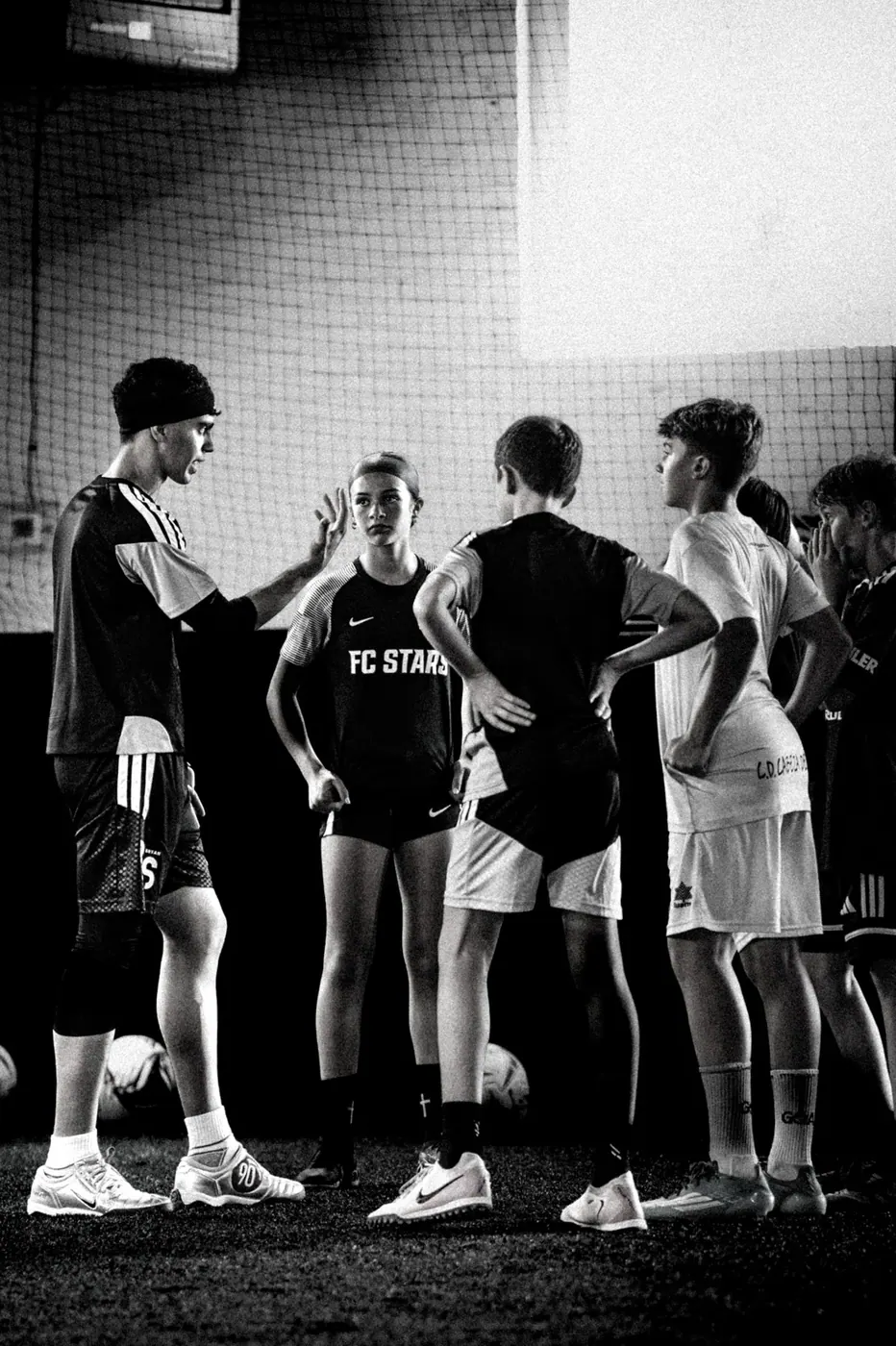
A detail can change the entire action: an approach angle, the quality of a first touch, or the moment a player accelerates into space. We give it the attention it deserves, then bring back pressure, opponents and decisions. A detail is only worth training if it helps the player play.
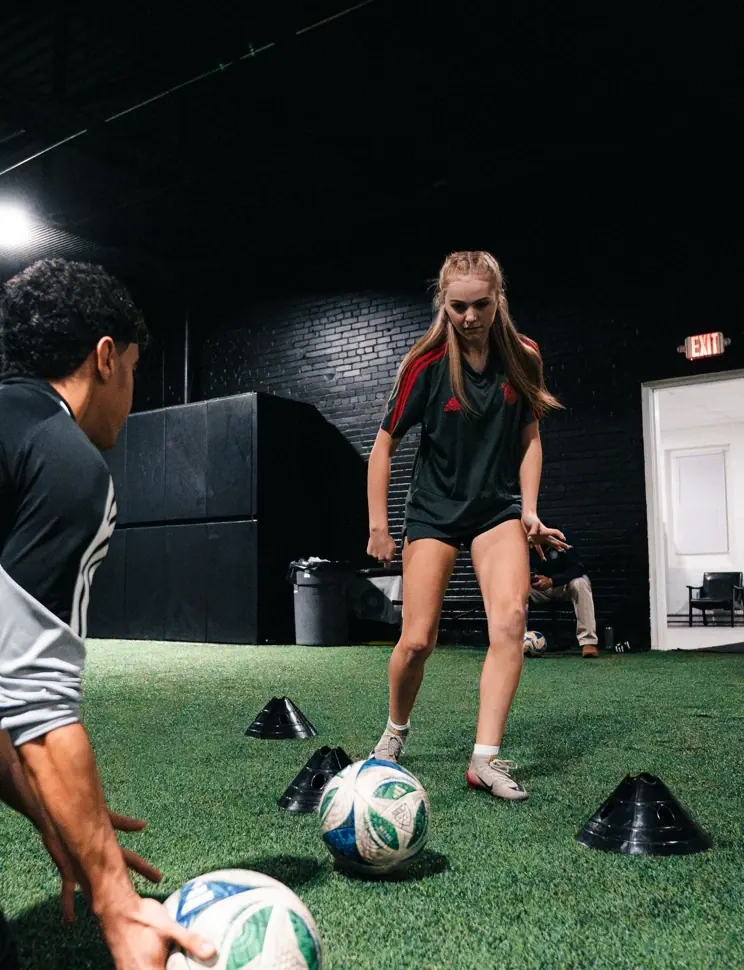
One player gives us the freedom to examine the action closely: movement mechanics, contact quality, perception, execution and physical limits. We can adjust the task, choose the repetitions and increase the challenge without losing sight of the player’s position and competitive needs.
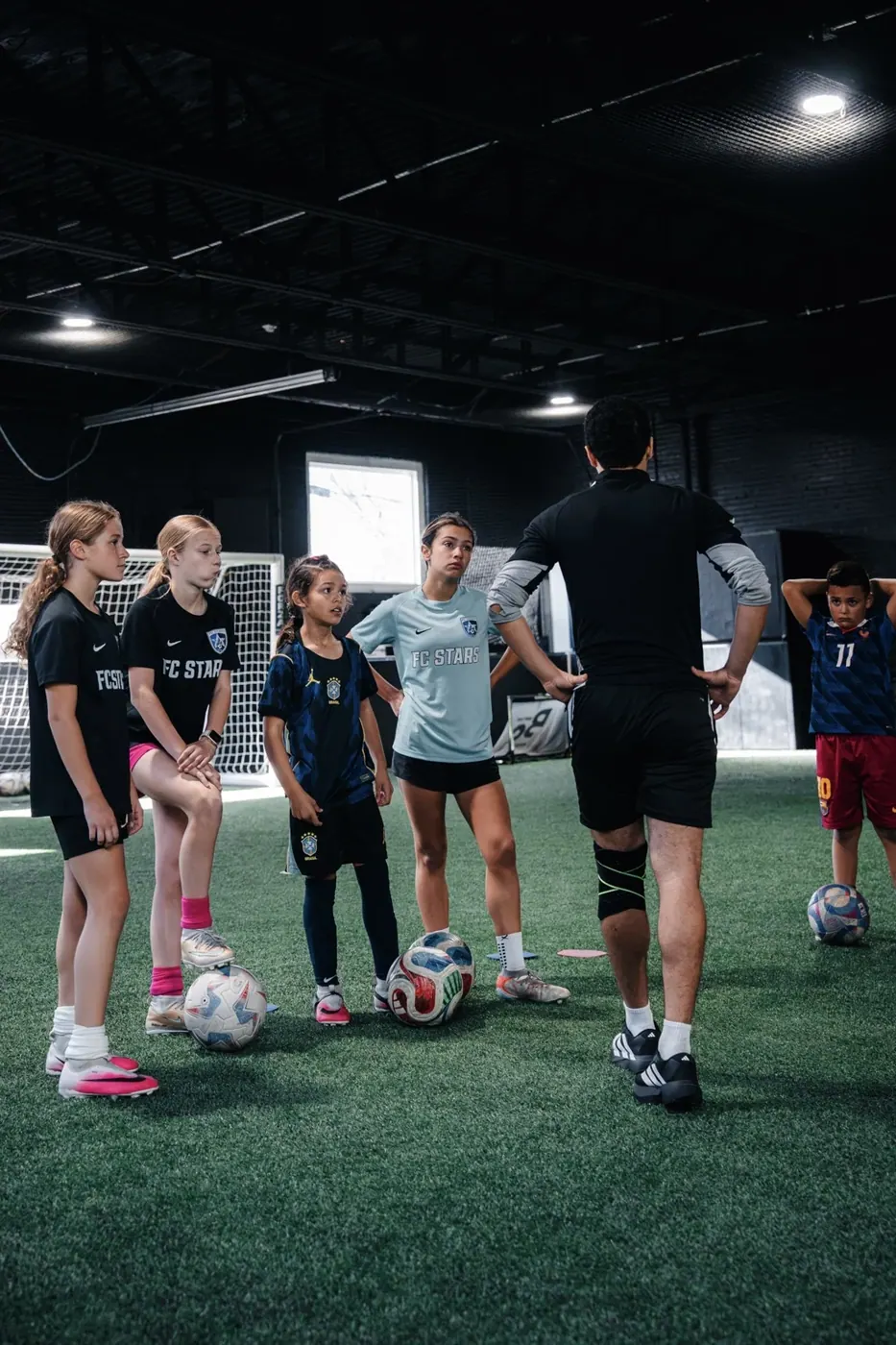
Small groups let the same technical work meet another player’s movement and intention. Passing angles change. Pressure becomes real. Timing has consequences. We add people when they make the soccer problem more honest, not merely to make a drill look busier.
We have spent enough time on training fields to recognize the pressure to produce something new every session. A more elaborate drill can look exciting to a parent, a player or a camera. But novelty is not evidence of learning.
We train the soccer problem, not the appearance of training. Sometimes that means a deceptively simple exercise, repeated until a movement becomes more consistent. Sometimes it means resistance, speed or an opponent that forces a new decision. We change the task because the player needs it, never because the footage needs it.
The process asks for patience. Younger children should discover soccer through play, curiosity and enjoyment. Players pursuing demanding goals must also learn to value the less glamorous work: focused repetition, useful feedback and progress that may not announce itself after one session. Being committed to the process is not the same as making every session boring.
Preparation is part of the method. We consider what the player has already done, what the next match demands and how much recovery is available. Strength, acceleration, deceleration and total workload must support performance rather than compete with it.
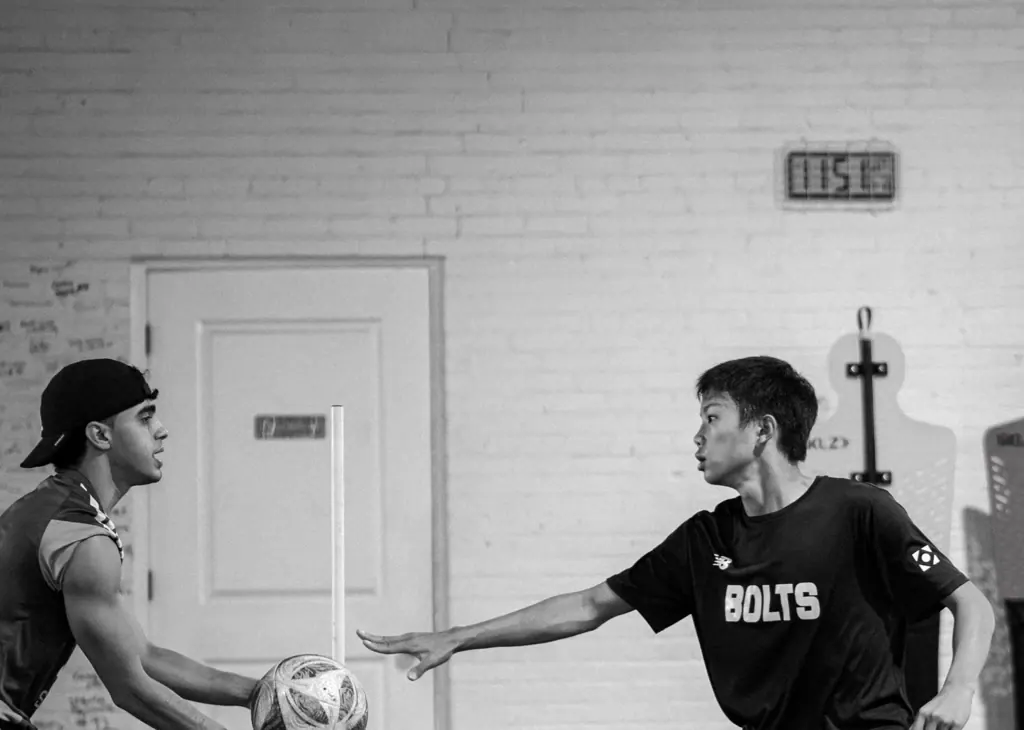
There are no fixed recipes for an age group. What matters is the player’s experience, ambition, physical readiness and current soccer problem. A college player and a professional may need the same kind of detailed work; a young player may need that same principle expressed through play.
Build confidence, coordination, technique and a relationship with the ball through age-appropriate challenge and enjoyment.
Position-specific work, match readiness, technical execution under pressure and physical preparation that respects a demanding schedule.
Whether the target is a team selection, greater consistency or a professional pathway, we organize the work around the player, not a label.
Real sessions. Different players. A common commitment to purposeful practice.
My name is Ayman El Banouri. I hold a Bachelor of Sports Sciences with a soccer specialization. Across four years of study, I kept returning to one question: what actually changes the level of an individual player? Not just the team’s tactics, but the player’s movement, technique, physical qualities, perception, learning and capacity to perform under pressure.
That question led me through movement science, motor learning, exercise physiology and strength and conditioning, including work with professional athletes. None of these disciplines explains soccer by itself. Together with experience on the field, they help us identify what matters, choose a suitable training challenge and adjust when the player gives us new information.
An evidence-informed practice. Never a promise that a measurement or a textbook knows the whole player.
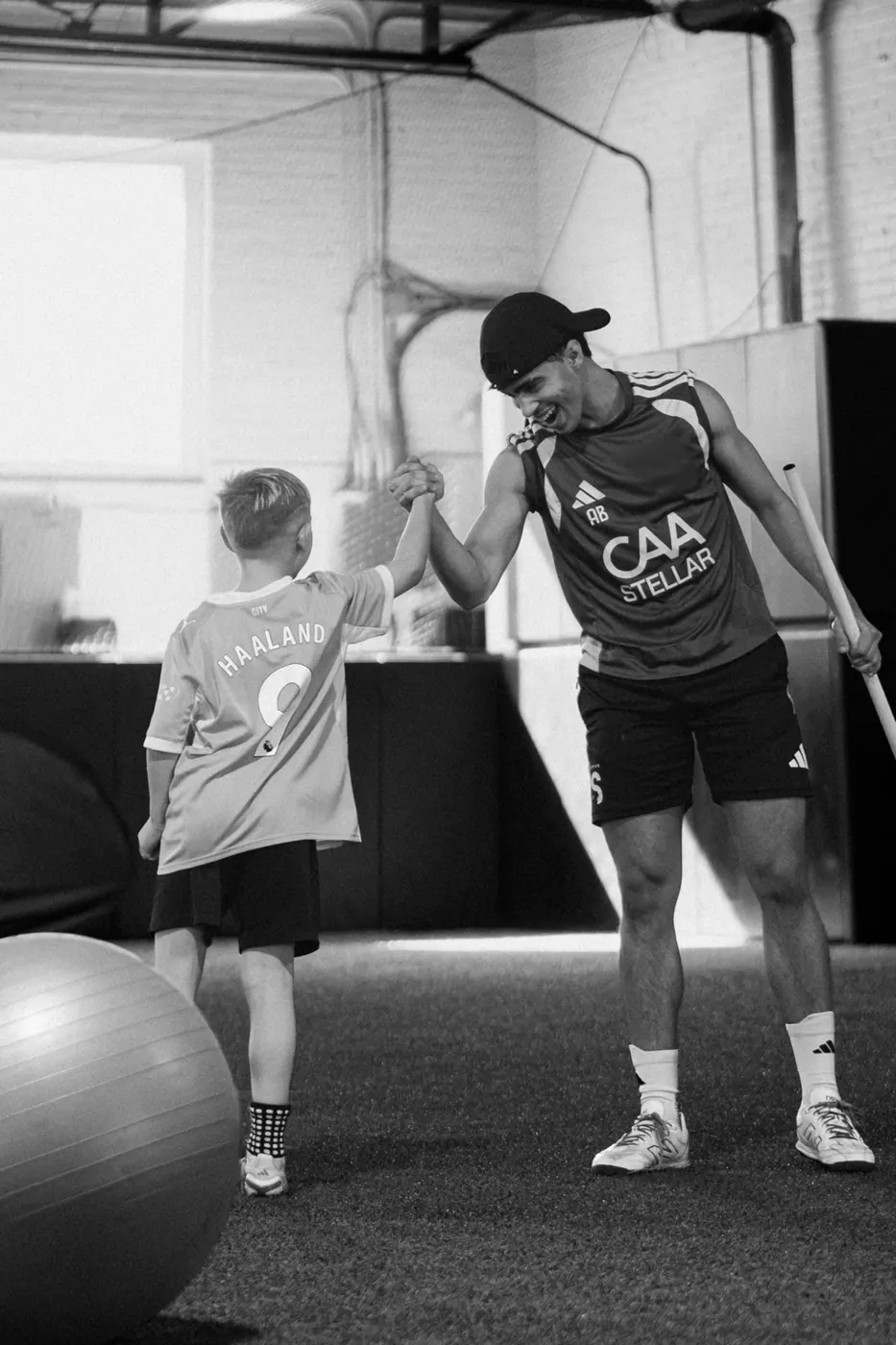
Some moments in development cannot be understood by looking at a drill alone. A player's confidence, trust, willingness to attempt something difficult and response to feedback all change how practice is experienced.
Technical detail matters. So does the person carrying it into the game.
XI is eleven. The number of players on a soccer team, and a reminder that individual progress eventually belongs to a game of relationships. THEORY is the other half: an idea we can defend, test and revise. We believe deeply in purposeful development without pretending any coach has discovered the final answer.
Research informs our decisions. The player, the opponent and the next match reveal what those decisions are worth.
The coach can organize practice. The player must still see, attempt and create answers that were never scripted.
We want better movement and better judgment without losing risk, personality, play and the joy that brought us here.
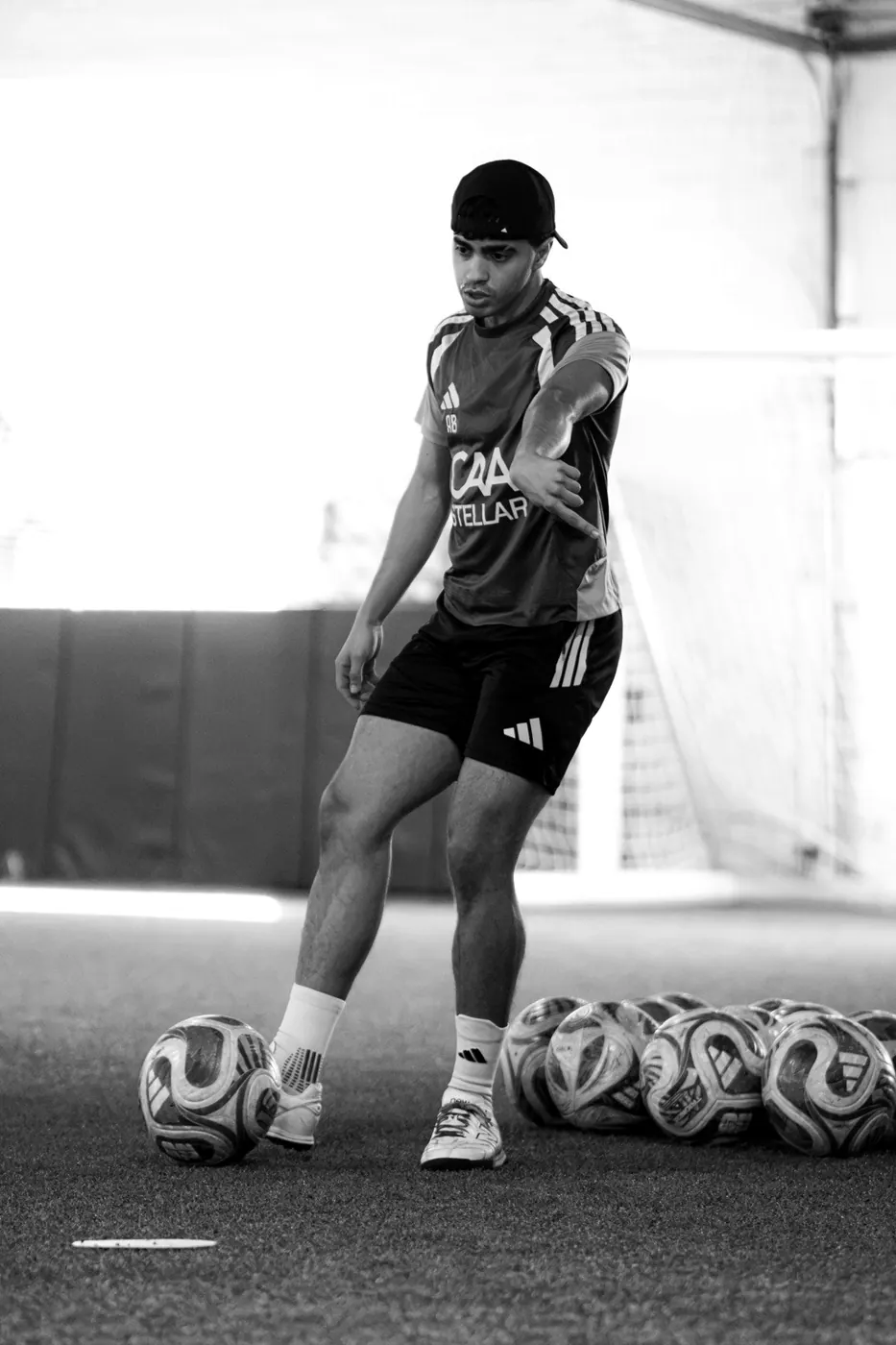
I was working toward a professional playing future when an injury at seventeen changed the direction of my life. It did not change what the game meant to me. It changed what I wanted to understand about it.
I followed those questions into sports sciences in Morocco and later Paris, then onto training fields with players whose problems never fit neatly into a theory. XI THEORY is the name I gave to that continued search.
Ayman El Banouri
Founder of XI THEORY · Bachelor of Sports Sciences · Soccer specialization · Strength and conditioning background
Training starts with context, not a checkout screen. Tell me who the player is, what level they are playing at, what they feel is missing and what their week currently looks like. From there we can decide whether individual or small-group work makes sense and find the right availability.