TRAINING

THE PLAYER IS
THE STARTING POINT.

Focused individual and small-group soccer development from youth through college and competitive adult levels. The player’s needs, not the category, decide the training.

Coach demonstrating movement and change of direction during indoor soccer training

NO TWO PLAYERS
NEED THE SAME SESSION.

Two players can occupy the same position and need entirely different work. One may struggle to turn the right way before receiving. Another may see the option but lack the speed or strength to execute it. A third may have the tools but not yet trust them under pressure.

Our first task is to identify what is limiting the player in a recognizable soccer action. Then we choose the right kind of practice: focused repetition, an opponent, a change of speed, physical preparation or a combination. The exercise follows the player, not the other way around.
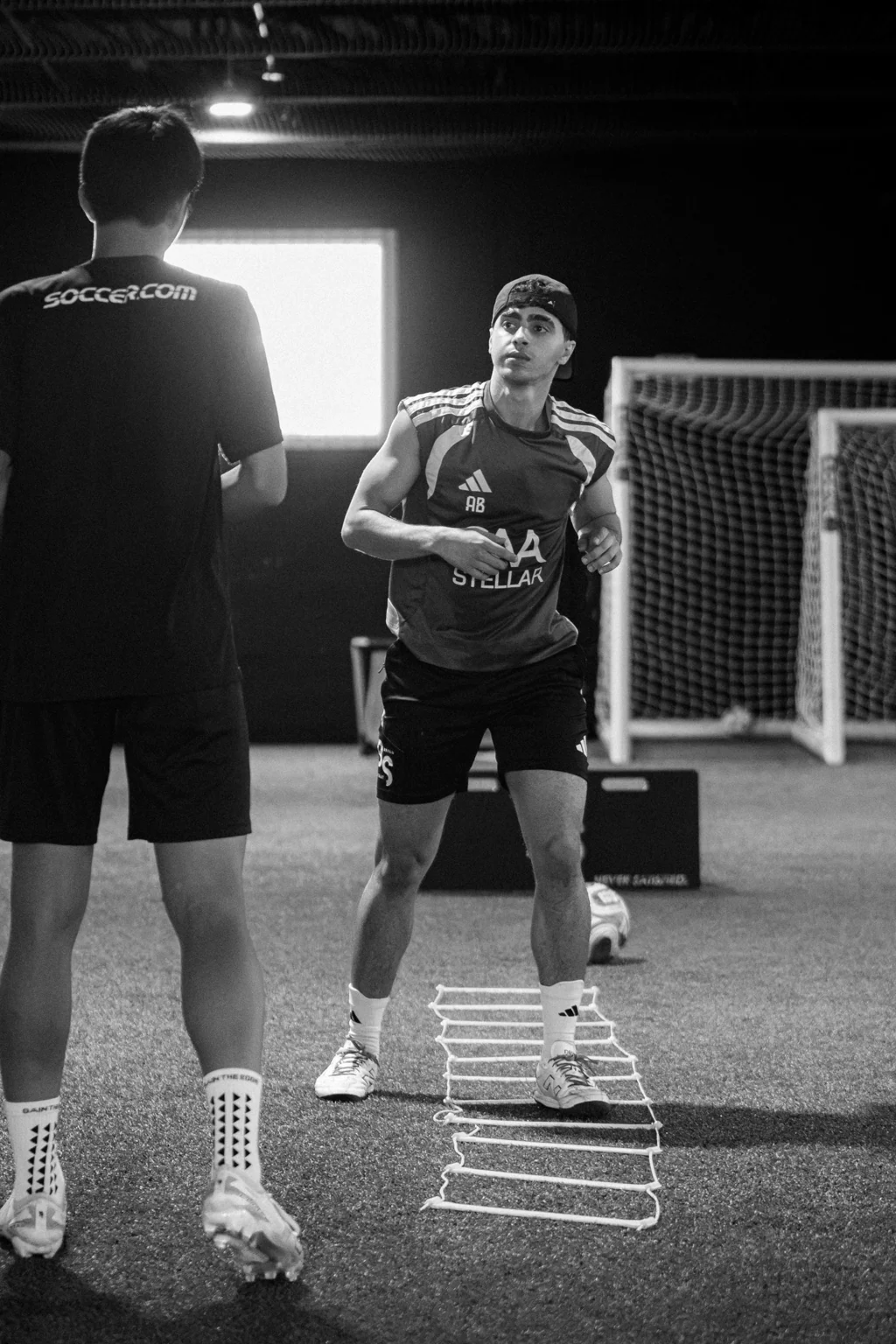
Individual training.

Best for isolating a detail, controlling the tempo and giving one player a high dose of relevant repetitions. We can clean up body shape, timing, contact quality and position-specific movement with close observation and feedback.

Small-group training.

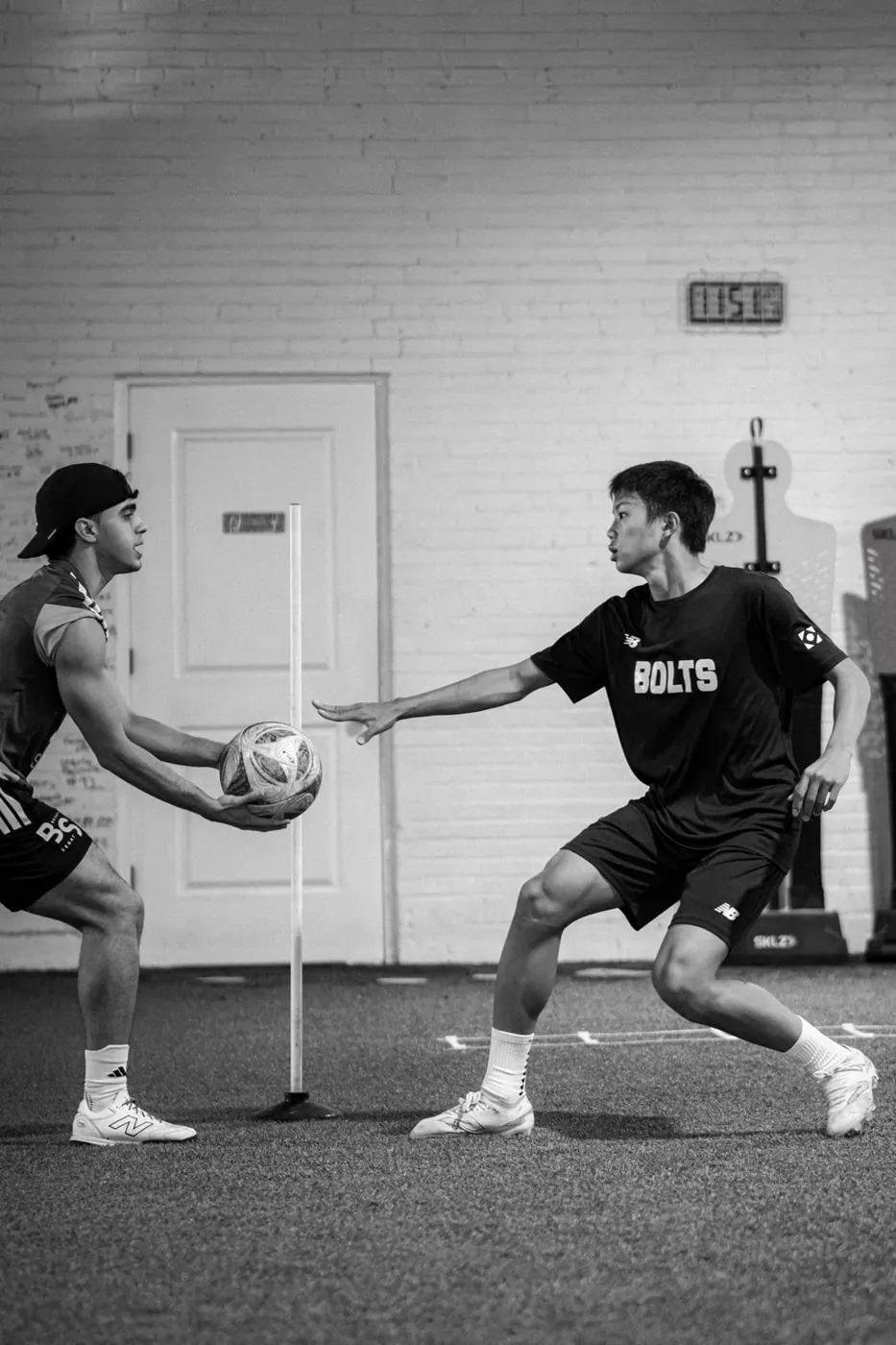
Best when the action needs teammates, defenders or shared space to become realistic. The player now has to read cues, disguise intentions, protect the ball and solve pressure at the right moment.

THE SAME TECHNIQUE. A DIFFERENT PROBLEM.

Unopposed work can clean the action. Interactive work tests whether the action survives pressure, timing and choice.

SERVERPLAYER
Unopposed detail workIsolate. Clean. Repeat.
PASSPLAYERDEFENDER
Interactive / opposedRead. Protect. Solve.

Illustrative practice situations, not fixed training prescriptions.

Player reaching toward the ball during a soccer receiving exercise

DIFFERENT PLAYERS. SHARED STANDARDS.

We work with players whose lives in soccer look very different. A young player discovering the game, a college player managing matches and training, and a competitive adult all deserve an approach built around their specific needs.

The standard is the same: understand the player, explain the purpose, and adjust the challenge. Position-specific training, technical detail and match preparation are not reserved for professionals.

Youth development.

Enjoyment, coordination, a growing technical repertoire and the confidence to make decisions. Play is part of how children learn.

College and competitive soccer.

Position-specific technical detail, action under pressure, speed, strength and match readiness, with care for a crowded training calendar.

Individual goals.

Return to form, a higher team level, better consistency or professional ambition. The program is shaped by the person and the problem.

THE NEXT REP
STARTS HERE.

Tell us where you play, what you are working toward, and what you need from training.

START TRAINING